Publish Date :
Fashion Product Development: Connecting Design, Costing and Approvals Through PLM
The designer changes the blazer fabric, but the sample and cost sheet still describe the earlier version. A small material decision can become a wrong sample, an unexpected cost or an unclear approval. Forge keeps the product definition at the centre of that conversation.
INSIDE MERCHMIX / FORGE
The fabric changes.
Check the whole style.
Follow a blazer’s change from cotton plain weave to proposed cotton twill through the BOM. Two metres at the new price add $4 per garment, while the revision remains proposed.
Forge BOM illustration with a consistent garment and component-cost basis.
Everyday Blazer / Build BOM
$24 shell + $16 other components = $40. All figures use the same garment and consumption basis.
Everyday Blazer uses two metres of shell fabric at $12 per metre. The draft BOM’s component total is $40 per garment.
THE KEY IDEA
A fabric substitution changes the product being made and the cost being assessed. In Forge, connect the blazer’s proposed $44 BOM, sample checks and technical instructions to the same revision before sign-off.
A fabric change affects more than the design
Everyday Blazer uses two metres of shell fabric per garment. The proposed cotton twill costs $14 per metre, replacing cotton plain weave at $12 per metre. That adds $4 per garment before any other change. Across an assumed 500 units, the additional component cost is $2,000. If the sample still uses the earlier fabric, it also tests a different product from the one now proposed.
Merchmix is a connected platform for retail planning and operations. Forge is its product lifecycle management, or PLM, workspace: a place to organise a style’s design, materials, specifications and development decisions. For this blazer, the useful question is whether the material, cost and sample all refer to the same revision.
Define the style before discussing the replacement
The starting reference is Everyday Blazer, Revision 1, with cotton plain weave for the shell. Its design direction, construction and measurements need to be identifiable before a replacement fabric can be assessed. A sketch communicates the intended appearance; the technical definition explains how the garment should be made.
Forge’s design and development screens provide the setting for that work, from design references to product and material records. Keep the selected fabric reference and colour attached to the style discussion. Name the proposed cotton twill explicitly, so the supplier and sample team can distinguish it from the original cotton plain weave.
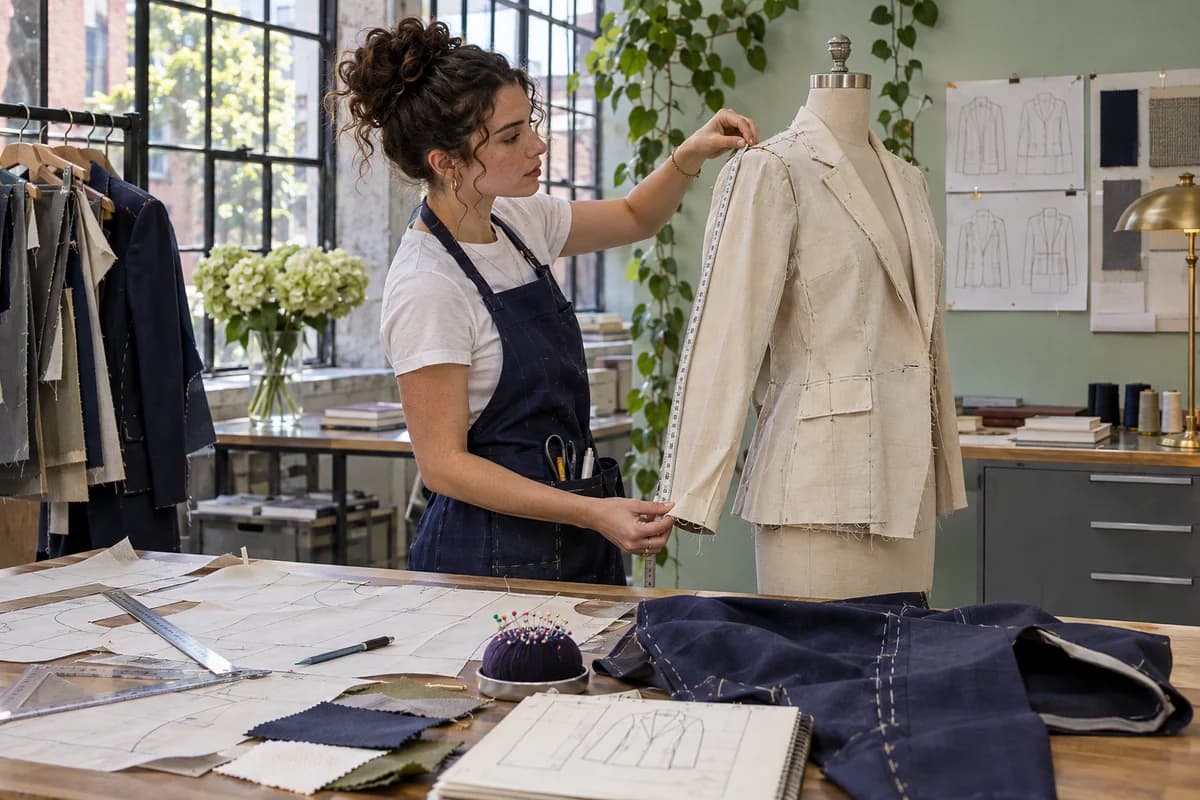
AN APPAREL PLANNING SCENARIO
A $2-per-metre change adds $4 to every blazer
Everyday Blazer uses two metres of shell fabric. Replacing cotton plain weave at $12 per metre with the proposed cotton twill at $14 per metre raises shell cost from $24 to $28. Other components stay at $16, so the BOM moves from $40 to $44. Across 500 units, the extra component cost is $2,000. The proposed cotton twill and the sample still require a revision-specific decision.
Illustrative situation, not a customer case study.Use the BOM to expose what actually changed
The bill of materials, or BOM, is the component list needed to make the garment. It identifies the fabrics, trims, labels and packaging, together with the required quantities and cost basis. Forge’s BOM grid includes component, quantity, unit of measure, unit cost, total, placement, supplier and status.
In the example, the original cotton plain weave shell is two metres at $12, totalling $24. Lining adds $6, four buttons add $2, a care label adds $1 and other trims add $7. The component total is $40. Using two metres of the proposed cotton twill at $14 per metre makes it $28 and the BOM total $44. The quantity basis stays the same, so the $4 difference is easy to trace.
Carry the revised component cost into the full cost basis
A BOM component total is not automatically the full cost of getting a garment ready for sale. Landed cost combines the relevant product cost with the agreed transport, duty and other applicable charges. State which costs are included rather than present the $44 component total as the final commercial answer.
For a worked calculation, assume $10 labour, $4 overhead, $3 freight and $3 duty per garment. Those unchanged additions total $20. The earlier $40 components give a $60 total on that basis; the proposed $44 give $64. If the proposed cotton twill also changes consumption, construction time or duty, recalculate those inputs instead of carrying them forward without evidence.
Keep the revision and technical instructions aligned
A tech pack is the set of technical instructions used to make and assess the product: its materials, construction, measurements and other required details. For the blazer, the supplier needs the proposed cotton twill reference and consumption to agree with the BOM and cost basis, rather than receive an updated sketch alongside an old component list.
The BOM screen shows a draft status, revision reference and Freeze control. The animation keeps Revision 2 proposed and sign-off pending. Check the material decision, measurement implications and commercial basis before using the supported approval and freeze workflow. A new revision number alone does not establish approval.
FROM THE SIGNAL TO THE MERCHMIX DECISION
What to check before the next action
| What you see | Where to look in Merchmix | The decision to review |
|---|---|---|
| Shell: 2 metres × $14 = $28 | Forge / Development / BOM | Confirm the exact fabric reference, consumption and affected placements. |
| Components: $40 → $44 per garment | BOM and the stated full-cost basis | Carry the $4 increase through the cost calculation and check other affected inputs. |
| Revision 1 cotton plain weave sample / Revision 2 proposed cotton twill | Development / testing and sample records | Assess the relevant checks against the correct revision before sign-off. |
A received sample still needs the right assessment
A sample is a physical development garment used to assess the intended product. Receiving it confirms that it is available to examine; it does not by itself confirm fit, construction or material approval. A Revision 1 prototype cannot establish that the proposed Revision 2 cotton twill performs as required.
Forge’s testing screens show records with statuses and next steps. The readiness animation uses that structure to keep the proposed cotton twill, prototype assessment, material testing and cost confirmation visible together. Ask which checks the substitution changes, who owns them and which revision the decision covers.
Give the supplier a precise development question
For this blazer, the supplier question is whether the proposed cotton twill can meet the specification at two metres per garment, and what changes to construction or testing it requires. The answer affects both the sample instruction and the $64 worked cost basis. A price response without the same consumption and product definition is not a comparable offer.
Keep the fabric reference, placement, consumption and revision attached to that exchange. When the supplier or technical team identifies another change, update the affected assumptions and return the right decision for approval. The development record should explain why the chosen definition changed, not leave the explanation scattered across attachments.
Close the material, cost and sample decisions together
Before the next sample or supplier hand-off, confirm that the shell reference, two-metre assumption, proposed $44 component total and technical instructions all describe the same blazer. Confirm the outcome of the relevant material and sample checks, then progress the authorised revision decision.
The two animations show the draft BOM calculation and the readiness checks, with approval still pending. They do not submit a freeze or issue a supplier pack. The outcome is a clear development question with a known cost effect and an identifiable revision, so the next team can work from the definition the business has agreed.
BEFORE SIGNING OFF THE MATERIAL CHANGE
- Which style, colourway and revision does the decision cover?
- Do the specification and BOM reflect the latest agreed change?
- Does costing use that same product definition?
- Which sample, supplier and approval questions remain open?
- Does the tech pack represent the intended approved revision?
A CLEARER NEXT STEP
Common questions
What is a BOM in fashion product development?
A bill of materials lists the components needed to make a garment and their quantity basis. For the blazer, it includes the shell, lining, buttons, care label and other trims. Its component total changes from $40 to $44 when the shell price changes.
Is the $44 BOM total the landed cost?
No. It is the component total in this example. Adding the stated $20 for labour, overhead, freight and duty gives $64 on that worked basis. Confirm all included costs and whether the fabric change affects any other assumption.
Does receiving a sample approve the proposed cotton twill?
No. The sample needs assessment against the relevant specification and revision. A prototype made against Revision 1 does not validate the proposed Revision 2 cotton twill, and the appropriate sign-off must still be recorded.
THE READINESS CHECK / FORGE
The sample arrived.
Which revision is it?
A cotton plain weave prototype based on Revision 1 needs to be assessed against the proposed cotton twill change. Keep the material, sample and cost questions visible before sign-off.
- 01Identify the changed material
Shell price changes from $12 to $14 per metre.
- 02Check the affected sample
The received prototype refers to the earlier fabric definition.
- 03Confirm readiness for sign-off
Resolve material, construction and cost checks for the chosen revision.
Blazer / readiness checks
Everyday Blazer uses two metres of shell fabric at $12 per metre. The draft BOM’s component total is $40 per garment.
FROM DESIGN INTENT TO A CONTROLLED RECORD
Keep the intent.
Connect the definition.
A fabric substitution changes the product being made and the cost being assessed. In Forge, connect the blazer’s proposed $44 BOM, sample checks and technical instructions to the same revision before sign-off.