Publish Date :
Missing Warning Labels on Kids’ Clothing: Compliance Starts at the Tech Pack
A garment can meet its flammability requirement and still fail the required warning-label rules. The H&M Australia finding makes a precise product-development lesson: Forge’s tech-pack evidence and Polaris market requirements should agree on the approved label before a product is treated as ready.
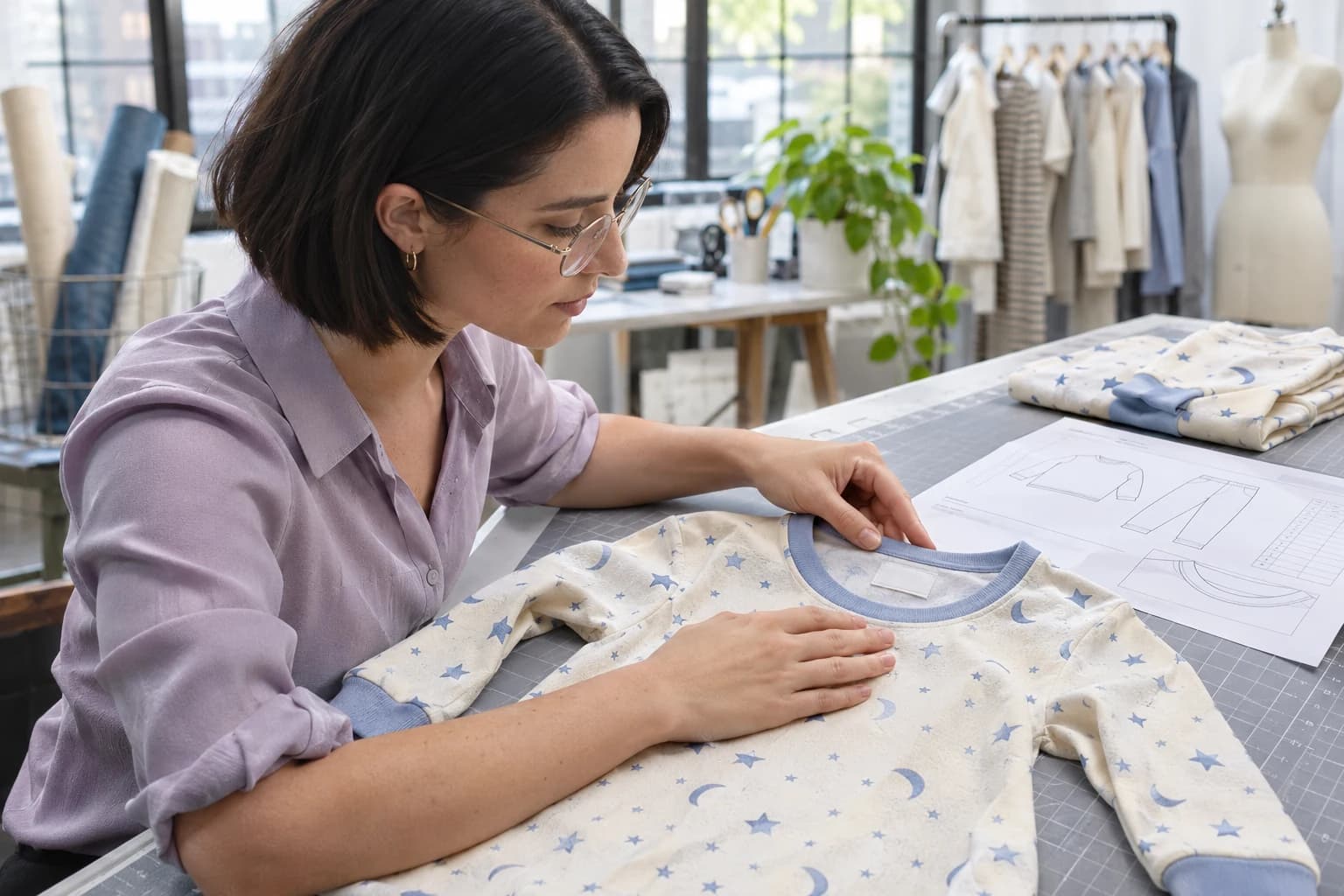
THE MERCHMIX DECISION / Forge + Polaris
The label needs its own evidence decision
Keep material testing, warning artwork, placement and market scope distinct before recording product readiness.
Independent worked retail example. Operational quantities and outcomes are assumptions, not company records or measured Merchmix results. Scenario financial amounts are US dollars. Proposed changes require the appropriate approval.
The label needs its own evidence decision
| Market | Sizes | Assessment |
|---|---|---|
| Australia | 3 | Separate requirements |
| UK | 3 | Separate requirements |
The six positions belong to an independent pyjama example, not H&M product records.
The six positions belong to an independent pyjama example, not H&M product records.
THE KEY IDEA
Keep material testing, warning artwork, placement and market scope distinct before recording product readiness.
The ACCC identified a label problem despite compliant flammability
The ACCC announced on 30 October 2026 that H&M Australia paid penalties following notices about absent or inaccurate fire-hazard warnings on children’s clothing. The regulator states that the garments met the standard’s flammability requirements, while some labels were missing and others had the wrong warning or position.
The release also records H&M’s undertaking to review its compliance processes and establish a product-safety compliance programme. It distinguishes the company’s admissions in that undertaking from the principle that payment of an infringement-notice penalty alone is not an admission. This is an older finding considered for its development-control lesson, not a new announcement on 27 November.
A test report answers only the question it covers
A fabric or finished-garment test does not by itself establish that the correct label was sewn into every relevant product in the required position. Compliance needs the applicable market, product classification, composition and approved warning considered together. A supplier’s familiar label may not be appropriate for another destination or garment category.
Forge supports specifications, materials, samples and the tech pack on one product record. Polaris links market requirements to rules and reviewed evidence. The qualified compliance team remains responsible for deciding what the product requires and whether the submitted evidence actually demonstrates it.
Separate the shared garment from its market-specific approval
An independent pyjama-style example has three sizes for Australia and the same three for the UK, making six SKU-market positions. The garment can share a development record while the evidence is assessed for each destination. Approval of the UK positions does not approve the Australian ones by implication.
Suppose the flammability evidence has been accepted for the relevant Australian scope, but a sample photo showing label wording and placement is still awaiting assessment. Keep the Australian readiness decision unresolved until that specific evidence is accepted. The illustration does not choose a legal warning category or claim that a photo alone is sufficient in every case.
THE FIGURES BEHIND THE DECISION
| Record | Required link | Owner |
|---|---|---|
| Tech pack | Revision B label specification | Technical |
| Sample evidence | Wording and placement | Compliance |
| Market status | Accepted applicable scope | Compliance |
Three sizes across two markets give six positions; this sequence assesses only the three Australian positions.
Control the version sent to production
The tech pack should identify the label artwork, placement specification and relevant approved sample version. If composition, construction or supplier changes, the technical and compliance owners should assess whether earlier evidence still applies. A green status belonging to an old version should not reassure a team about a changed garment.
In the example, revision B replaces revision A and needs the Australian evidence checked against the new scope. The material test and label assessment remain separate checks. Do not describe a supplier upload as approval or assume that all market statuses change merely because the main product record has been edited.
Review production evidence before calling the product ready
Polaris supports evidence review, validity tracking and clearances; Forge keeps the underlying specification and sample context together. The person making the decision needs to establish which sizes, version and market the accepted evidence covers. The number of files attached is not the measure of completeness.
The animation shows evidence moving from awaiting assessment to a recorded decision only as an explanatory sequence. It does not certify a real product, release an order or replace a physical production check. No customer or supplier data from the website is reused in these records.
Prevent the wrong label from becoming a repeated instruction
A practical sign-off asks whether the supplier, technical team and compliance owner are all referring to the same approved label and garment version. If the answer changes after production begins, identify the affected scope and use the appropriate corrective process. Do not simply update the artwork and assume existing units have changed with it.
The H&M case demonstrates why labelling belongs inside development control rather than as an administrative afterthought. Merchmix provides product and evidence context for the decision. It does not guarantee legal compliance or establish anything about the systems H&M uses.
BEFORE THE NEXT DECISION
- Evidence
Keep reported facts separate from the worked assumptions.
- Decision
Confirm the actual production evidence before release
| Signal | Responsible owner | Decision to review |
|---|---|---|
| Product scope | Forge | Do not inherit readiness across markets |
| Evidence checks | Forge | Resolve the label evidence before readiness |
| Version control | Forge | Record the decision against version and market |
Common questions
Did the garments fail the flammability test?
The ACCC said they complied with the flammability requirements. The identified failures concerned mandatory warnings, including absence, content or placement.
Does a UK approval also approve Australia?
No. The required evidence and legal scope must be assessed for the relevant market, even when the underlying garment is shared.
Is the example a certificate for a real style?
No. It is an independent workflow illustration. A qualified owner must assess actual products and evidence against current requirements.
Does accepting a new label file change existing production?
No. Identify which actual units and garment version the evidence covers, and use the appropriate corrective process where production differs.
FROM THE ARTICLE TO YOUR OWN RETAIL PLAN
Review the decision.
See the workflow.
Bring your planning questions to a demo, or explore a proof of concept on your own data.