Publish Date :
From Inspiration Photo to Print: Speeding Up the Design Board
Turning an inspiration photo into a usable print swatch, and splitting a head-to-toe outfit photo into separate garment references, took a designer roughly five hours by hand in the example below. Forge's drafting tools produced a first version of both in minutes; the designer still spent about an hour reviewing, correcting and approving them before they moved onto the design board.
THE MERCHMIX DECISION / Forge
Five hours of recreation, or about an hour of review
Recreating a print and separating an outfit by hand can cost a designer five hours before any new design decision is made. A reviewed first draft can get there in about an hour, with the designer's judgement still deciding what gets developed.
Independent worked design example. Hours and minutes are illustrative assumptions, not a measured customer result.
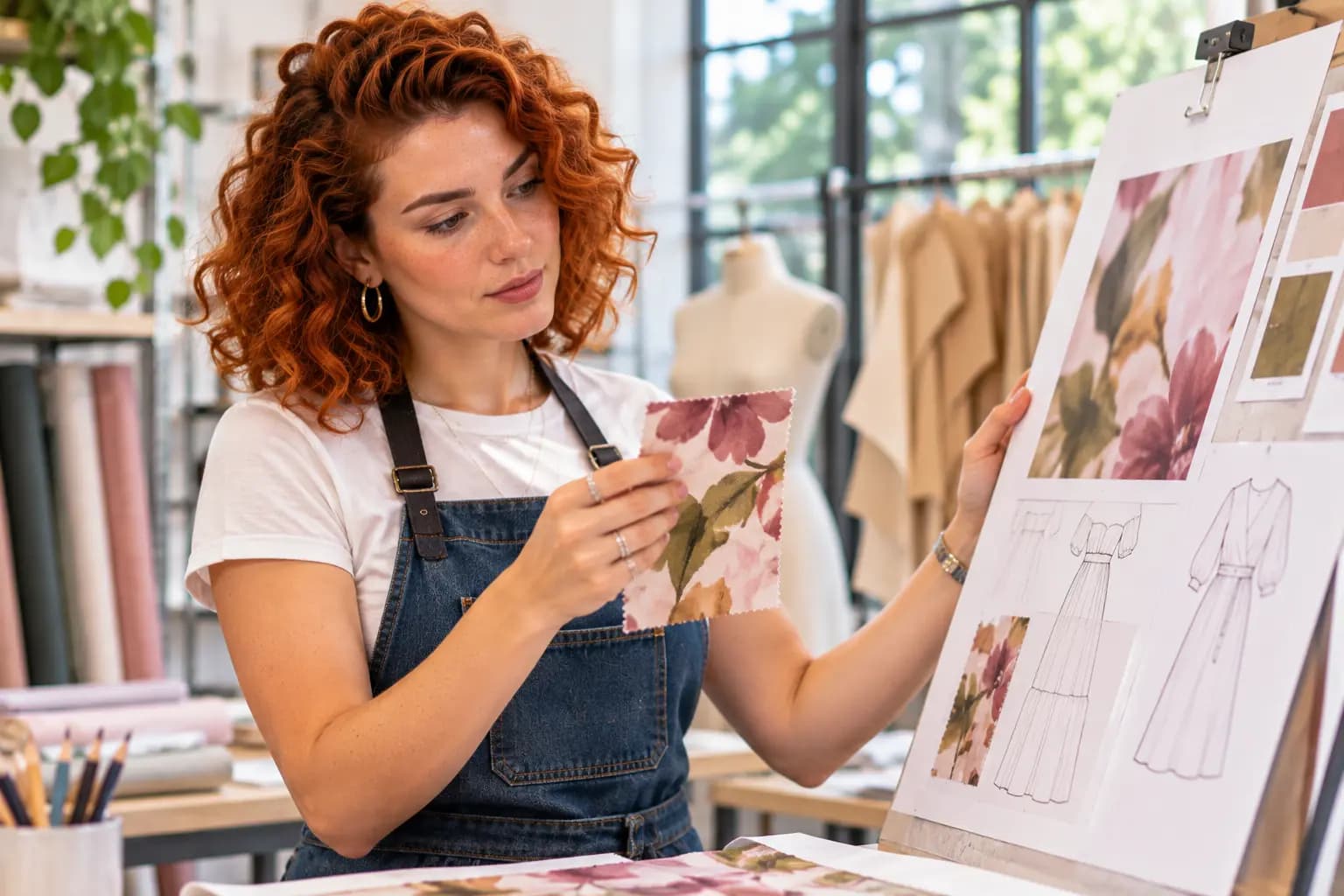
Floral print and outfit photo / design board
| Task | Manual time |
|---|---|
| Recreate the print swatch | 3 hours |
| Separate the outfit into garments | 2 hours |
This is recreation and preparation time, not fit, fabric or colour-story work.
Recreating the print and separating the outfit by hand.
THE KEY IDEA
Recreating a print and separating an outfit by hand can cost a designer five hours before any new design decision is made. A reviewed first draft can get there in about an hour, with the designer's judgement still deciding what gets developed.
The design board starts with hours of recreation, not design
A designer finds a street-style photo with a floral print and a layered outfit worth referencing. Before any new design work can start, the print has to be recreated as a clean, repeatable swatch, and the outfit has to be separated into individual garments so each can become its own style number.
None of that recreation work is the design decision itself. It is preparation the design decision depends on, and it is the first thing that happens to a new inspiration image, before colourways, fit or fabric are even discussed.
The manual version of this task
In the example, recreating the floral print by hand as a clean, tileable swatch takes the designer about three hours, matching scale, colour and repeat by eye. Separating the outfit photo into its three garments (a top, a bottom and an outer layer) for three potential style numbers takes a further two hours of manual tracing and reference work.
Five hours goes into one inspiration image before a single new design decision is made about fit, fabric or colour story.
What Forge's drafting tools produce automatically
Forge can turn the same inspiration photo into a draft repeatable print swatch, and split the outfit photo into three separate garment references, in minutes rather than hours. Each draft is a starting point built from the source image, not a finished production asset.
The draft print still needs its colour values checked against the brand's palette and its repeat confirmed at production scale. The split garment references still need the designer to confirm proportion, construction and which reference is worth developing into an actual style.
THE FIGURES BEHIND THE DECISION
| Task | Manual | Drafted and reviewed |
|---|---|---|
| Recreate the print swatch | 3 hours | ~20 minutes review |
| Separate the outfit into garments | 2 hours | ~45 minutes review |
| Total | 5 hours | ~65 minutes |
3 hours (print) + 2 hours (garments) = 5 hours manually, versus roughly 20 + 45 = 65 minutes of designer review of the drafted versions.
What still needs the designer's eye
In the example, reviewing and correcting the draft print swatch, adjusting two colour values and confirming the repeat, takes about 20 minutes. Reviewing each of the three split garment references, checking proportion and deciding whether it is worth developing, takes about 15 minutes each, 45 minutes total.
That is roughly 65 minutes of designer time, against five hours manually. The reduction comes from skipping the manual recreation, not from skipping the designer's judgement on whether the result is usable.
One inspiration photo, three new style starts
At the end of the review, the designer has approved one print swatch and decided that two of the three split garments are worth carrying forward as new style numbers; the third is set aside as a reference only. Forge keeps the source image, the draft and the designer's decision attached to each new style record.
This is the same kind of decision record used elsewhere in Forge: what was drafted, what was changed, and what a person decided to do with it, kept together rather than only the final approved asset.
A design starting point, not a finished or original claim
A draft built from a reference photo is a starting point for the brand's own design work, not a finished garment and not a claim that the result is already original or clear of the source image's own rights. The designer's review step is also where that judgement belongs, alongside proportion and colour.
Forge does not make that originality or rights determination. It drafts the recreation and the split so the designer's time goes into design and review decisions, not manual tracing.
| Signal | Merchmix workspace | Decision to review |
|---|---|---|
| A new inspiration photo needs a usable print swatch | Forge / design board | Draft the print, then review colour and repeat before production. |
| An outfit photo needs separating into style numbers | Forge / design board | Draft the split, then decide which garments are worth developing. |
| A draft is approved or set aside | Designer | Keep the source photo, draft and decision attached to the style record. |
What this does not claim
The three-hour and two-hour manual estimates, and the 20-minute and 45-minute review times, are independent assumptions for this illustration, not a measured customer result or a guarantee for every inspiration image. A more complex print or a more ambiguous outfit photo will take longer to both recreate and review.
This also does not claim every draft is usable. Some drafts will need more correction than this example shows, or will not be worth developing at all; the designer's review step is where that gets decided.
BEFORE THE NEXT DECISION
- Designer
Confirm the draft print's colour values and repeat before production approval.
- Designer
Review each split garment's proportion and construction before carrying it forward as a style.
- Design lead
Confirm the final design is the brand's own original work before it proceeds past the design board.
Common questions
Is the draft print swatch production-ready?
No. In the example it still needs about 20 minutes of colour and repeat correction before it is confirmed for production.
Does splitting an outfit photo decide which garments become new styles?
No. The designer reviews each split garment and decides whether it is worth developing; in the example, two of three were carried forward.
Does Forge confirm a design is original or clear of the source photo's rights?
No. That judgement belongs to the designer and the brand's own review process, alongside proportion and colour decisions.
Is five hours a typical manual recreation time?
No. It is this illustration's assumption. Actual time depends on the print's complexity and the outfit photo's clarity.
Does the 65-minute review time include deciding the final design?
No. It covers checking and correcting the draft print and garment splits. Fit, fabric and colour-story decisions happen afterward.
FROM THE ARTICLE TO YOUR OWN RETAIL PLAN
Review the decision.
See the workflow.
Bring your planning questions to a demo, or explore a proof of concept on your own data.